
A full charcuterie board for six people at $25 works out to about $4.15 per person, and I have built enough of them to know that number is real, not aspirational. The trick is not buying less cheese. It is buying the right cheese, the cheap cuts that taste expensive, and skipping the $9 jar of cornichons nobody finishes.
Advertisements1
Here is the math I actually use: $7 for two cheeses, $6 for two cured meats, $5 for crackers and bread, $4 for fruit and nuts, $3 for olives or pickles. That is $25, and it fills a standard 18×12 inch board with overlap and height, which is what makes a board look generous.
The trap is the middle aisle. Imported prosciutto at $14 a quarter pound and triple-cream brie at $11 a wedge will eat your whole budget in two items. I build this board around domestic alternatives and one anchor item, and nobody at the table has ever guessed the total cost. Keep it real.
Why You'll Love This Recipe
About the Ingredients
8 oz (225g) block sharp white cheddar, cut into 1/4-inch slices
Buy a block, never pre-shredded or pre-sliced, because blocks are $1-2 cheaper per pound and slice cleaner. Sub aged gouda or a domestic gruyere-style alpine cheese if cheddar is not on sale.
6 oz (170g) fresh mozzarella log or 8 oz (225g) brie wedge
A soft cheese balances the hard one, and a whole brie wedge is usually cheaper per ounce than a small round. Sub a $3 log of goat cheese or a small camembert if brie is over $8.
6 oz (170g) sliced salami or soppressata
Deli-counter salami runs $6-8 a pound versus $12+ for imported cured meats. Ask for it sliced thin (about 1/16 inch) because thin slices fold into roses and stretch further.
4 oz (115g) sliced ham or turkey, rolled
Rolled deli meat adds height and a third protein for under $3. Sub prosciutto ends, which many delis sell at half price, if you want the real thing cheap.
1 sleeve (about 40) round butter crackers plus 1/2 baguette, sliced
Butter crackers are $2-3 and hold up under soft cheese; a day-old baguette is often marked down 50 percent. Sub pita chips or seeded flatbread if you want more texture.
1 cup (150g) red grapes, plus 1 apple or pear, sliced
Grapes are the cheapest board fruit per pound and fill gaps fast. Sub clementines in winter or strawberries in summer when they drop under $3 a pound.
1/2 cup (70g) whole almonds or mixed nuts
Buy plain roasted unsalted nuts from the bulk bin, which is 30-40 percent cheaper than branded bags. Sub roasted pumpkin seeds or peanuts if tree nuts are pricey.
1/2 cup (85g) green olives or 1/4 cup (40g) cornichons
A brined element cuts the fat and costs under $3 for a jar that lasts months. Sub pickled okra, pepperoncini, or a few slices of pickled beet.
3 tbsp (45g) honey or fig jam, plus 1 tsp Dijon mustard
One sweet and one sharp condiment is all a board needs. Sub maple syrup, hot honey, or a spoon of whole-grain mustard.
2 sprigs fresh rosemary or a handful of fresh parsley
Green garnish makes the board look styled for about 50 cents. Sub any herb you already have, or use a few extra grapes as visual filler.
Tips & Tricks
- Do not buy pre-sliced cheese or pre-cubed meat. They cost 20-40 percent more per ounce, dry out, and cannot be folded or fanned into shapes that create height.
- Shop the deli counter and the bulk bins, not the specialty cheese case. The same weight of domestic salami and bulk almonds saves roughly $8 on this board.
- Build on a flat surface with a rim or a sheet pan lined with parchment. A rimless board looks great in photos and dumps grapes on the floor in real life.
- Slice everything before guests arrive, but leave the soft cheese out for 30 minutes first. Cold brie tastes like nothing; room-temperature brie tastes like butter.
Pro Tips
Step-by-Step Instructions
1. Set up the board
Line an 18×12 inch rimmed sheet pan or a large cutting board with parchment. Pull the brie or mozzarella out of the fridge now so it warms toward room temperature while you work.
2. Slice the cheeses
Cut the cheddar block into 1/4-inch planks, then stack and fan them in two separate zones on the board. Cut the brie into wedges or the mozzarella into 1/2-inch rounds and place them opposite the cheddar.
3. Fold the meats
Fold each salami slice into quarters and pinch into a loose rose, grouping 8-10 roses in one pile. Roll the ham or turkey slices loosely and tuck them next to the salami so the colors alternate.
4. Add the crackers
Fan the crackers in a shingled arc along one edge and stack baguette slices in a short pile in a corner. Leave a few gaps on purpose so you have room to fill later.
5. Fill the gaps with fruit
Tuck grape clusters into every open space, then fan the apple or pear slices near the soft cheese. Push fruit right up against the cheese so the board looks dense.
6. Spoon in the condiments
Set two small bowls on the board, one with honey or fig jam and one with Dijon. Add olives or cornichons to a third small bowl and nestle it between the meat and crackers.
7. Scatter and finish
Scatter almonds across the empty spots and tuck rosemary sprigs or parsley between the piles. Do a final lap and fill any bare wood with extra grapes or crackers.
8. Rest and serve
Let the board sit at room temperature 20-30 minutes before serving so the cheese softens and the flavors open up. Serve with small tongs or a cheese knife at each cheese zone.
Delicious Variations
Italian Version
Swap cheddar for provolone and add a $3 jar of roasted red peppers plus a handful of pepperoncini for a sharper, brinier board.
Holiday Version
Replace grapes with cranberry sauce in a bowl and add a $2 log of goat cheese rolled in dried cranberries for a red-and-white look.
Vegetarian Version
Drop both meats and add a can of drained chickpeas roasted at 400F (205C) for 25 minutes until crisp, plus an extra cheese like smoked gouda.
How to Store Charcuterie Board Low Budget
Refrigerator
Store components separately in airtight containers for up to 4 days. Keep cheese wrapped in parchment then plastic, and keep crackers in a sealed bag so they do not go stale.
Freezer
Hard cheese can be frozen in blocks for up to 2 months, but it turns crumbly, so use it for melting afterward. Do not freeze soft cheese, crackers, or sliced fruit.
Reheating
No reheating needed. Let refrigerated cheese sit out 30 minutes before serving again, and refresh limp crackers in a 300F (150C) oven for 5 minutes until crisp.
Frequently Asked Questions
Q: How much cheese and meat do I need per person for a charcuterie board?
Plan on 2 ounces of cheese and 2 ounces of meat per person for an appetizer board, which is exactly what this $25 board delivers for six. If the board is the main event, bump it to 3 ounces of each per person and add a second baguette.
Q: What is the cheapest way to build a charcuterie board?
Buy block cheese instead of pre-sliced, deli-counter salami instead of imported cured meats, and bulk-bin nuts instead of branded bags. Grapes and butter crackers are the two cheapest fillers that still look impressive, and they cost under $5 combined.
Q: Can I make a charcuterie board the night before?
You can slice everything the night before, but assemble the board the same day for the best look. Store sliced cheese, meat, and cut fruit in separate airtight containers overnight, then arrange in 15 minutes before serving.
Q: What cheese is best for a budget charcuterie board?
Sharp cheddar and a soft brie or mozzarella log give you the best contrast for under $8 total. Cheddar brings salt and bite, while brie or mozzarella brings creaminess, and together they cover both the hard and soft cheese categories.
Q: How do I keep a charcuterie board from looking cheap?
Create height by folding meat into roses and fanning cheese slices, and fill every gap with grapes or crackers. Empty wood is what makes a board look skimpy, so overlap items and use small bowls for anything liquid.
Grab a sheet pan, a $25 bill, and build this board this weekend. Then send me a photo of your total receipt and your spread, because I want to see how far you pushed it. Keep it real.
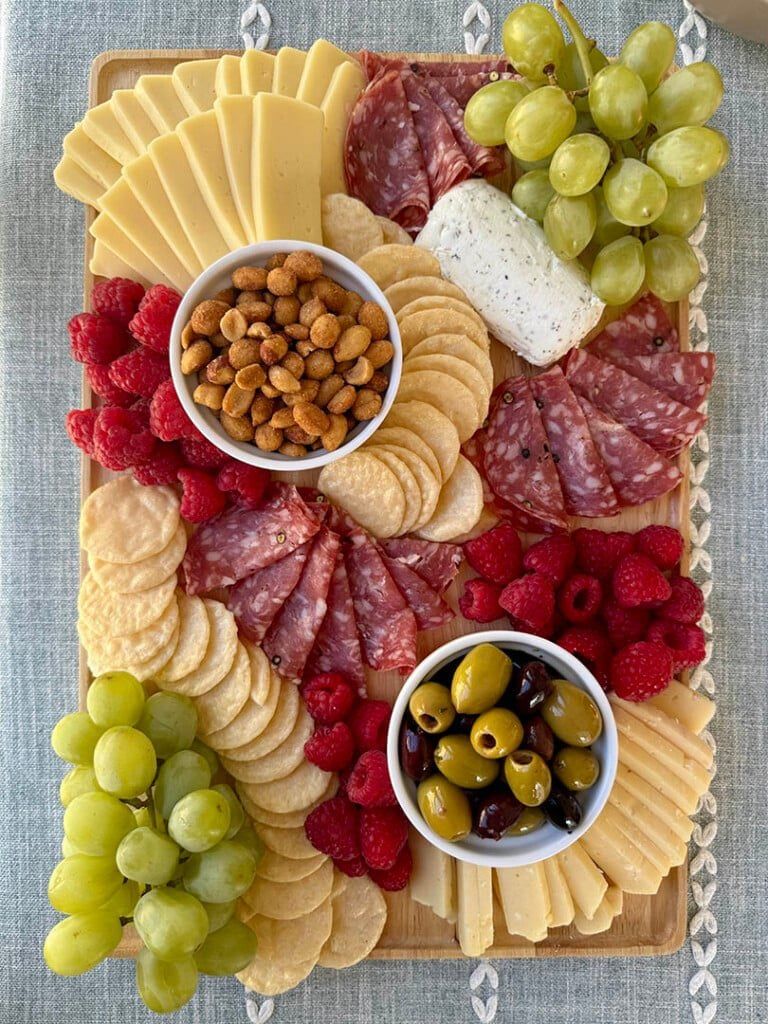
Charcuterie Board Low Budget
Charcuterie Board Low Budget builds a stunning $25 spread for 6 with smart swaps, bold pairings, and zero filler so every bite earns its place.
🧂 Ingredients
- 8 oz (225g) block sharp white cheddar, cut into 1/4-inch slices
- 6 oz (170g) fresh mozzarella log or 8 oz (225g) brie wedge
- 6 oz (170g) sliced salami or soppressata
- 4 oz (115g) sliced ham or turkey, rolled
- 1 sleeve (about 40) round butter crackers plus 1/2 baguette, sliced
- 1 cup (150g) red grapes, plus 1 apple or pear, sliced
- 1/2 cup (70g) whole almonds or mixed nuts
- 1/2 cup (85g) green olives or 1/4 cup (40g) cornichons
- 3 tbsp (45g) honey or fig jam, plus 1 tsp Dijon mustard
- 2 sprigs fresh rosemary or a handful of fresh parsley
📋 Instructions
- 1Set up the board — Line an 18×12 inch rimmed sheet pan or a large cutting board with parchment. Pull the brie or mozzarella out of the fridge now so it warms toward room temperature while you work.
- 2Slice the cheeses — Cut the cheddar block into 1/4-inch planks, then stack and fan them in two separate zones on the board. Cut the brie into wedges or the mozzarella into 1/2-inch rounds and place them opposite the cheddar.
- 3Fold the meats — Fold each salami slice into quarters and pinch into a loose rose, grouping 8-10 roses in one pile. Roll the ham or turkey slices loosely and tuck them next to the salami so the colors alternate.
- 4Add the crackers — Fan the crackers in a shingled arc along one edge and stack baguette slices in a short pile in a corner. Leave a few gaps on purpose so you have room to fill later.
- 5Fill the gaps with fruit — Tuck grape clusters into every open space, then fan the apple or pear slices near the soft cheese. Push fruit right up against the cheese so the board looks dense.
- 6Spoon in the condiments — Set two small bowls on the board, one with honey or fig jam and one with Dijon. Add olives or cornichons to a third small bowl and nestle it between the meat and crackers.
- 7Scatter and finish — Scatter almonds across the empty spots and tuck rosemary sprigs or parsley between the piles. Do a final lap and fill any bare wood with extra grapes or crackers.
- 8Rest and serve — Let the board sit at room temperature 20-30 minutes before serving so the cheese softens and the flavors open up. Serve with small tongs or a cheese knife at each cheese zone.

Diego covers personal finance and side hustles, with a focus on creative ways to earn extra income. He writes from the perspective of a self-taught tinkerer who tests ideas himself, sharing what works and what doesn't. His approach is candid and numbers-driven, without the hype.